

Vincent Van Gogh in Brixton
How a 20-year-old Dutchman Ended Up in Brixton
Van Gogh was transferred to the London branch of art dealers Goupil & Cie in May 1873, having worked at their Hague office for several years. He was just 20 years old. At that age, he was earning more than his father, working as a dealer in art photography and prints out of their Covent Garden gallery.
His first London lodgings were too expensive, so in August 1873 he moved into a room on the top floor of 87 Hackford Road, a three-storey Georgian terrace in Brixton, paying 12 shillings a month — just over a third of his salary.
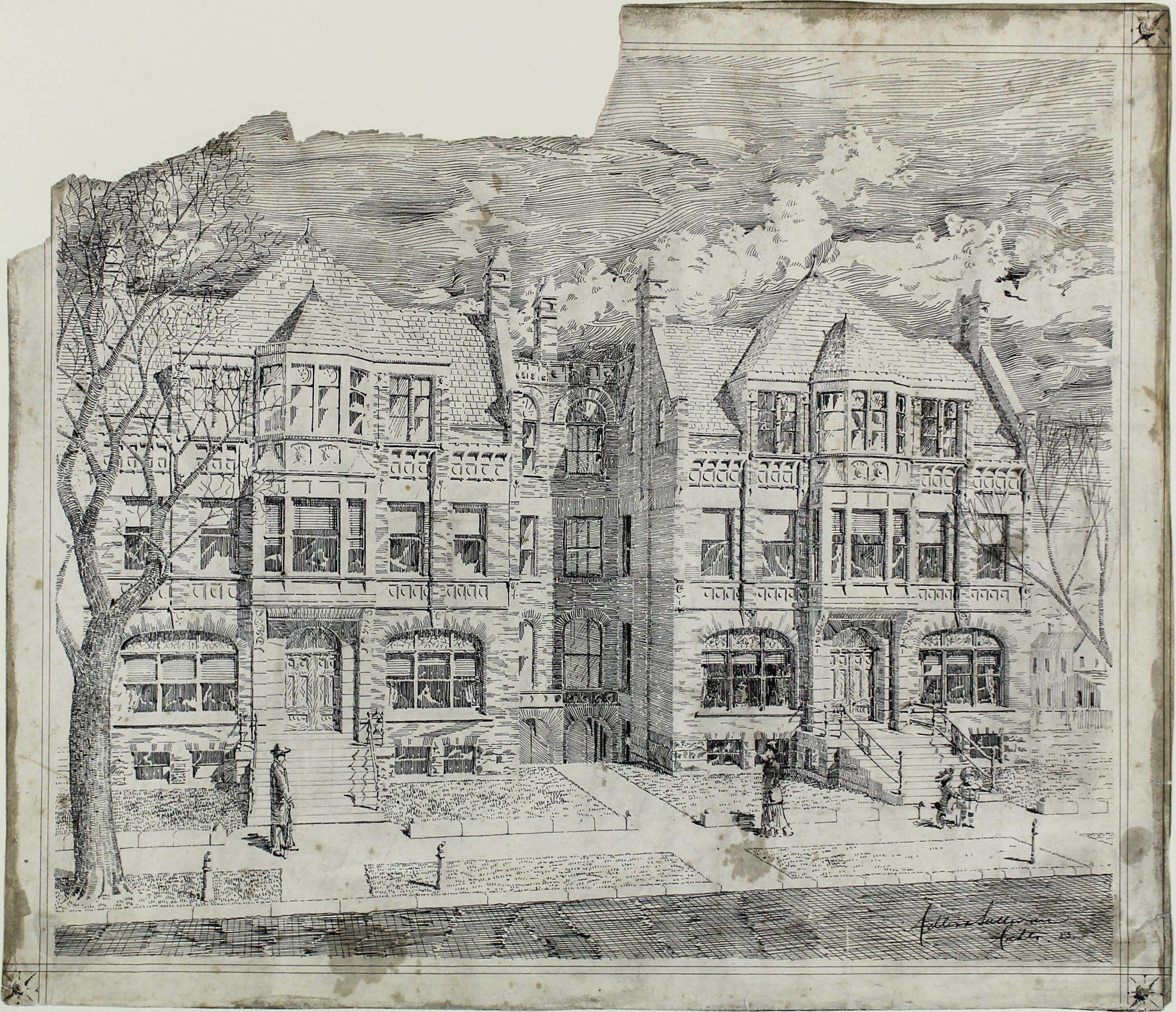
Here’s the thing that makes this story wild: thirty years before Van Gogh moved in, Hackford Road had been open fields. Brixton was the outer suburbs. And the main street crossing Hackford Road was then named Holland Street — no Dutch connection though; the land had been owned by Lord Holland.
The Household: The Loyers
His new landlady was Sarah Ursula Loyer, a widow who lived with her teenage daughter Eugenie. Ursula ran a small school in the front room of number 87, helped by Eugenie, and also took in lodgers. Census records show another tenant called Samuel Plowman was also living at the house.
The house itself was already rich with history before Van Gogh arrived. Under the floorboards of what would become Van Gogh’s bedroom, a collection of children’s toys and handwritten scraps were later discovered — one signed and dated by a James Wigmore in 1858, followed by the line “Embrace every opportunity of acquiring knowledge” dated 1861.
The Happiest Year of His Life
This is where it gets beautiful for a Brixton story. His time at 87 Hackford Road might have been the happiest of his life.
In January 1874 he wrote to his brother Theo: “Things are going well for me here, I have a wonderful home and it’s a great pleasure for me to observe London and the English way of life.” He talked about having nature, art, and poetry — asking what more anyone could need.
In spring he threw himself into the back garden, writing to Theo that he’d sown sweet peas, poppies, and reseda, and was waiting to see what would come of it. He bought a top hat to fit in. His mother wrote to Theo, “Our Vincent wrote that he had bought a top hat; you cannot be in London without one.”
He submerged himself in English culture — gardening, Christmas traditions, rowing on the Thames.
The Daily Walk: Brixton to Covent Garden
This is a great visual detail for BCC readers who know these streets. Van Gogh walked to work at the Goupil gallery in Southampton Street, three miles away. A brisk walker, he could do it in just under an hour.
His route took him up what is now Van Gogh Walk, along Clapham Road, past Kennington Park, down Kennington Road to Lambeth North, across Westminster Bridge — where the light over the Thames caught his eye — and on through Whitehall to Covent Garden.
On his way home, he would sometimes stop and sketch along the Thames Embankment. Years later, he regretted no one had taught him perspective at that time, writing that it would have spared him much misery.
In November 1873, he sent his parents drawings of the street, the house, and the interior of his room.
The Hidden Van Gogh Artwork
This is a brilliant twist. The sketch Van Gogh made of 87 Hackford Road is considered the first known work by Vincent van Gogh — but it wasn’t recognized as his until a full century later, in 1973.
He’d drawn the three-storey terrace in pencil with chalk highlights, labelling the wall “Hackford Road” and the gate “Maison Loyer.”
The discovery story is remarkable. In 1971, a local Brixton postman named Paul Chalcroft — an avid Van Gogh enthusiast — used a postal strike to track down the precise address, cross-referencing the 1871 census. Then in 1973, journalist Ken Wilkie visited Eugenie’s granddaughter, Kathleen Maynard, in Devon. While looking through family photographs, he noticed a dusty, tea-stained drawing in the box. He took it to Amsterdam where it was authenticated. The drawing was lent to the Van Gogh Museum for its reopening in 1973 and remained in their care for over three decades.
The Heartbreak
Van Gogh fell in love with the landlady’s 19-year-old daughter, Eugénie Loyer. He pursued her from the day he arrived but the feelings were not returned — she was apparently secretly engaged to someone else.
There’s a lingering mystery here. A letter from his sister Anna suggests he actually fell for 58-year-old Ursula, though most believe it was Eugénie. This ambiguity later became the basis for Nicholas Wright’s Olivier Award-winning play Vincent in Brixton (2002, National Theatre).
The rejection ended his time at Hackford Road. His father wrote to Theo in August 1874: “They have moved and live no more en famille... At the Loyers it appeared not to be too satisfactory.” Vincent and his sister Anna moved to Ivy Cottage at 395 Kennington New Road.
What Brixton Did to His Mind
This is the angle that makes this more than a quirky local fact. London — and Brixton specifically — fundamentally shaped the artist Van Gogh would become.
Literature: The lead curator of Tate Britain’s Van Gogh and Britain exhibition described him as “an intensely literary artist” whose London reading was as important to his later development as the images he encountered. In his letters, Van Gogh mentions over one hundred books by British authors. He devoured Dickens especially — re-reading A Christmas Carol and The Haunted Man almost every year from boyhood. His 1890 portrait L’Arlésienne, painted in the final year of his life, shows a book with “Charles Dickens” written on the spine.
He discovered the poetry of John Keats while in London. He wrote to Theo: “The last few days I’ve enjoyed reading the poems of John Keats; he’s a poet who isn’t very well known in Holland. He’s the favorite of the painters here.”
Social consciousness: Shocked by London’s poverty, he began questioning capitalism and vowed to live a meaningful life. A print of Newgate Prison stayed with him for years — he finally painted Prisoners Exercising in 1890. Britain’s rising socialism influenced him so deeply that when he later volunteered as a pastor in a Belgian mining village, he donated everything he and the Church had to the villagers — and got fired for it.
Art: He admired Turner’s atmospheric force and Constable’s truthful topography. He visited the Royal Academy regularly. He collected illustrated papers like The Graphic, whose engravings of everyday hardship deepened his empathy for working people.
Brixton’s Legacy: How the Area Keeps Van Gogh Alive
This is the local hook for your readers:
Van Gogh Walk — Formerly known as Isabel Street, it was pedestrianised and renamed, with plants inspired by his paintings — cypress and olive trees, sunflowers, grasses, and colourful perennials. Quotes from his Brixton letters are carved into the sides of the flower beds.
Van Gogh Primary School — The school opposite 87 Hackford Road renamed itself Van Gogh Primary School.
87 Hackford Road / Van Gogh House — The Grade II listed building fell into near-dereliction and was purchased at auction by James Wang and Alice Childs in 2012. Conservation took seven years. Rather than creating a museum, they wanted the house to remain a dwelling — hosting artist residencies and exhibitions while preserving its fabric. During renovation, they discovered 83 different types of vinyl flooring in the house. It’s now a non-profit with no consistent public funding, and they’re raising funds for their 2026 programme of artist residencies and community events.
The blue plaque sits on the front of the house.
The statue — A Van Gogh statue in Brixton was designed without a pipe, gun and razor blade after concerns about the area’s problems with violent crime.
And right now — literally this month — Vincent in Brixton is playing at The Orange Tree Theatre in Richmond until April 18th, a revival of the 2002 National Theatre play that imagines his year in this house.
Cant wait to see it tonight.
GVDP